 Preslav Rachev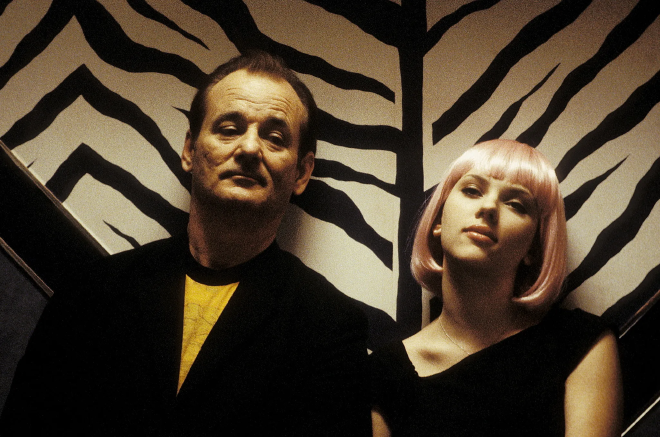
I am not a fan of streaming subscriptions. Not so much, because of the price I used to pay each month, as for their nonstop clickbait nature. It’s a machine designed to keep you hooked. Not engaged — if you were actually interested in the movie, you wouldn’t be scrolling through your Instagram feed, while watching, would you? Being hooked keeps your dopamine levels high, without forcing you to think too much, and that’s OK for most people.
Not for me, though. I have a limited amount of time to live on this planet, and would rather spend every minute questioning things than tacitly swallowing the content soup I’m being fed with. Which is why, even in 2026, I still go to iTunes to rent movies I pick myself.
Last night, my wife and I picked Sofia Coppola’s Lost in Translation from 2003. I remember having heard of the movie when it came out, but back then I was 15, and it wouldn’t have resonated with me. But now, I’m 38, nostalgic about the recent past, an, boy, was it a welcome change from all the slop of nowadays!
Sofia Coppola made a film that trusts you. Not the algorithm that picked the movie for you. You. If you are used to social media’s non-stop chatter, brace yourselves, because there are long silences. Freaking one-minute silences that can cause anxiety to an uninitiated youngster, or the very least, make them switch the channel.
Lost in Translation is a delight for the thinking mind, and a torture for the one seeking dopamine comfort. There is no plot in the classical sense. Scenes randomly weave into one another with little context, leaving intentional gaps that only your mind can fill in. One of the pivotal moments is shot not at the characters but through a hotel window — their reflections ghosted against a Tokyo night blazing with thousands of moving cars. Conversations dissolve into city noise. The people become background. The city breathes in the foreground. That inversion says everything without explaining it.
I have been reading and listening to Craig Mod lately, his dispatches from walking rural Japan, his writing about slowness as resistance. Watching this film, I felt that same frequency. Quietness not as bug but as a feature. There is no doomerism here. No algorithm deciding what you should feel next. There are two people existing, honestly, briefly, in a city that does not need them to explain themselves.
That used to be what movies were allowed to do.
Have something to say? Join the discussion below 👇
Want to explore instead? Fly with the time capsule 🛸